
Open Tuesday to Saturday, 10:00 am to 5:00 pm
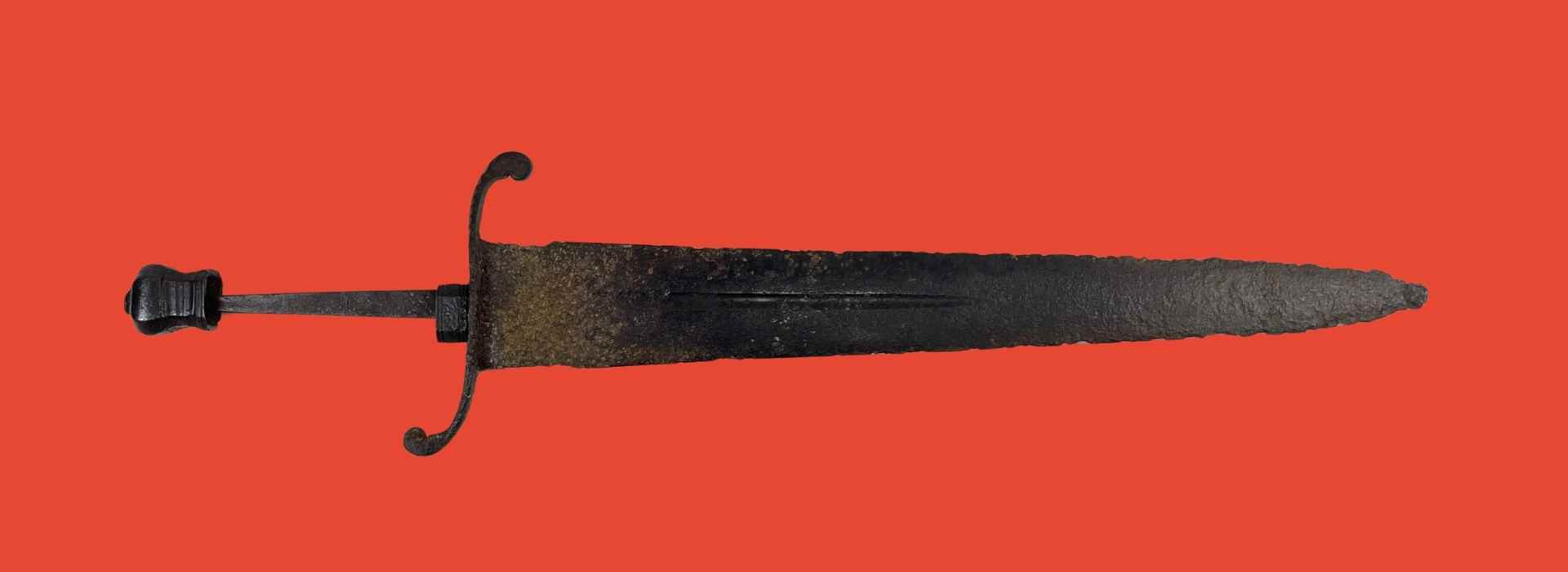
Keay Dagger

Unknown maker High Prairie, Alberta

The Keay Dagger was discovered in 1923 by Sadie (Rogers) Keay while breaking prairie land with a horse-drawn plough on the George Robertson farm near High Prairie. At the time of its discovery, the object was believed to be a sword and became locally known as the “Keay Sword” after the woman who found it. For decades, little was known about the artifact’s origins, and it remained one of the more intriguing objects associated with the region’s early settlement history.

In 2022, further research revealed that the object was likely not a sword at all, but a large dagger or hanger—a type of bladed weapon commonly carried at the belt between the 16th and 18th centuries. Distinguished by its characteristic S-shaped guard, the dagger belongs to a family of weapons used throughout Europe during the early modern period. How such an object came to be buried in northern Alberta remains unknown, adding to its significance and mystery.

Today, the Keay Dagger is preserved in the museum collection as an artifact that continues to spark questions about travel, trade, migration, and the many untold stories that connect High Prairie and the Lesser Slave Lake region to the wider world.

  • Unknown maker
  • 16th to 18th Century
  • Artifact
  • Metal

The Keay Dagger belongs to a broad family of short European sidearms often known as hangers or hunting swords. Popular between the 16th and 18th centuries, these objects were usually worn from a belt and were shorter and more practical than full-length swords. Many had a single-edged steel blade, sometimes slightly curved, with a protective guard near the hand. The S-shaped guard seen on examples from this period was not only decorative; it helped protect the hand while giving the object its distinctive profile.

Objects like this were made by skilled metalworkers using forged steel blades fitted into separate hilts made from iron, brass, wood, horn, antler, or other materials. Some were plain working objects, while others were highly decorated with engraved blades, shaped guards, or ornamental grips. Hangers were associated with hunting, travel, military service, and everyday protection, which makes the Keay Dagger especially intriguing. Although its original owner and journey to northern Alberta remain unknown, its form connects it to the wider world of early modern Europe.

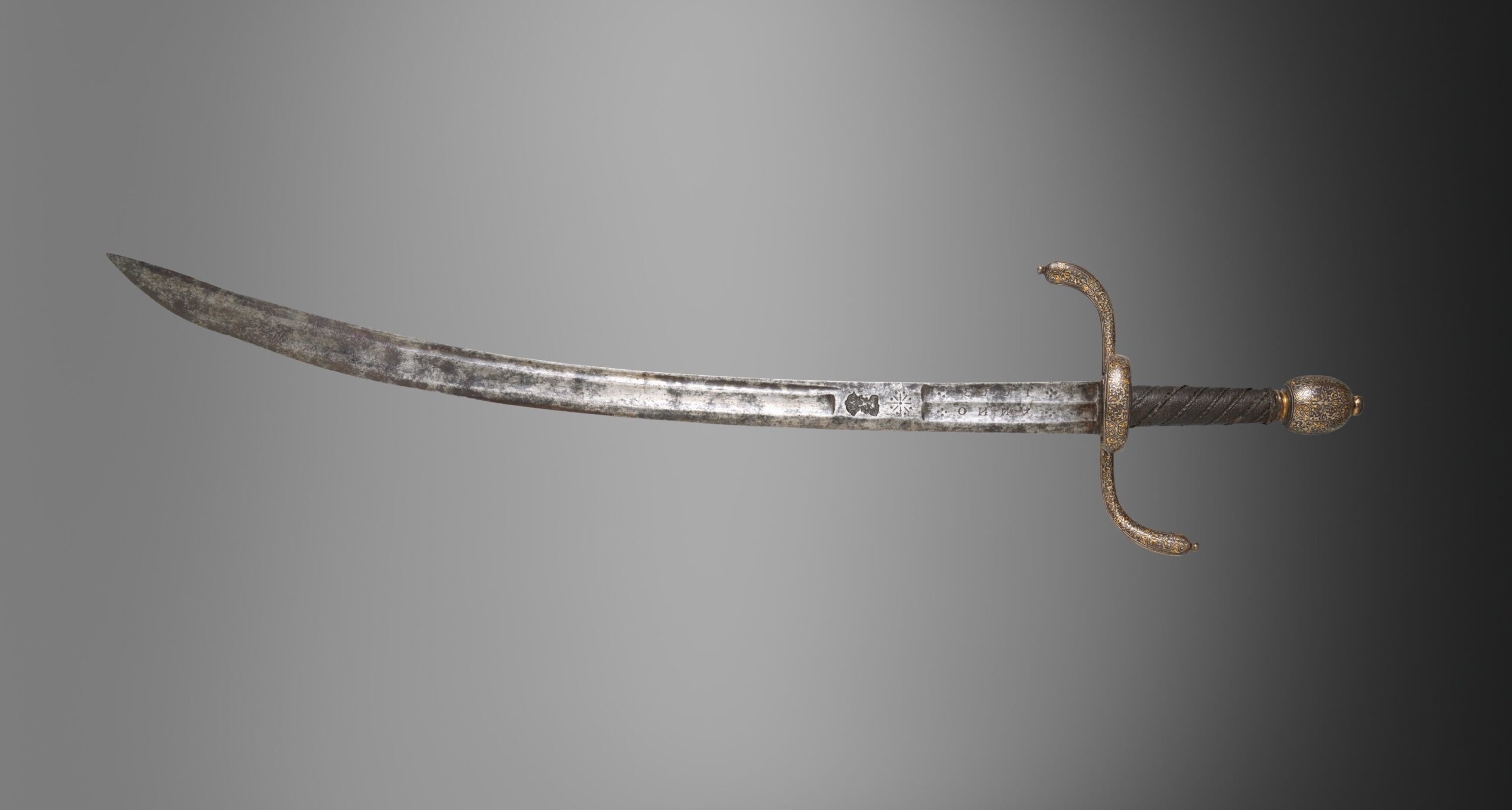
Comparative example: A late-1600s European hanger or hunting sword with an S-shaped guard, held by the Cleveland Museum of Art. Shown here to illustrate the type and era of object researchers believe the Keay Dagger may represent. This is not the Keay Dagger.

[caption id="attachment_6498" align="alignnone" width="2560"] Hanger (Hunting Sword), late 1600s. Jaspar Bongen the Younger (German, active late 1600s). Steel; gold and silver damascened hilt; overall: 73 cm (28 3/4 in.); blade: 57.7 cm (22 11/16 in.); quillions: 17.5 cm (6 7/8 in.). The Cleveland Museum of Art, Gift of Mr. and Mrs. John L. Severance, 1916.1629[/caption]

The Town of High Prairie acknowledges Treaty 8 territory, the ancestral and traditional territory of the Cree, Dene and Métis. We acknowledge the many First Nations, Métis, and Inuit peoples whose footsteps have marked these lands for generations, including the many places you are joining us from. We are grateful for the many Traditional Knowledge Keepers and Elders who are still with us today and those who have gone before us. Our recognition of this land is an act of reconciliation and an expression of our gratitude to those whose territory we reside on, or are visiting.

Town of High Prairie © 2026. All Rights Reserved
Privacy Policy / Terms of Use