
Open Tuesday to Saturday, 10:00 am to 5:00 pm
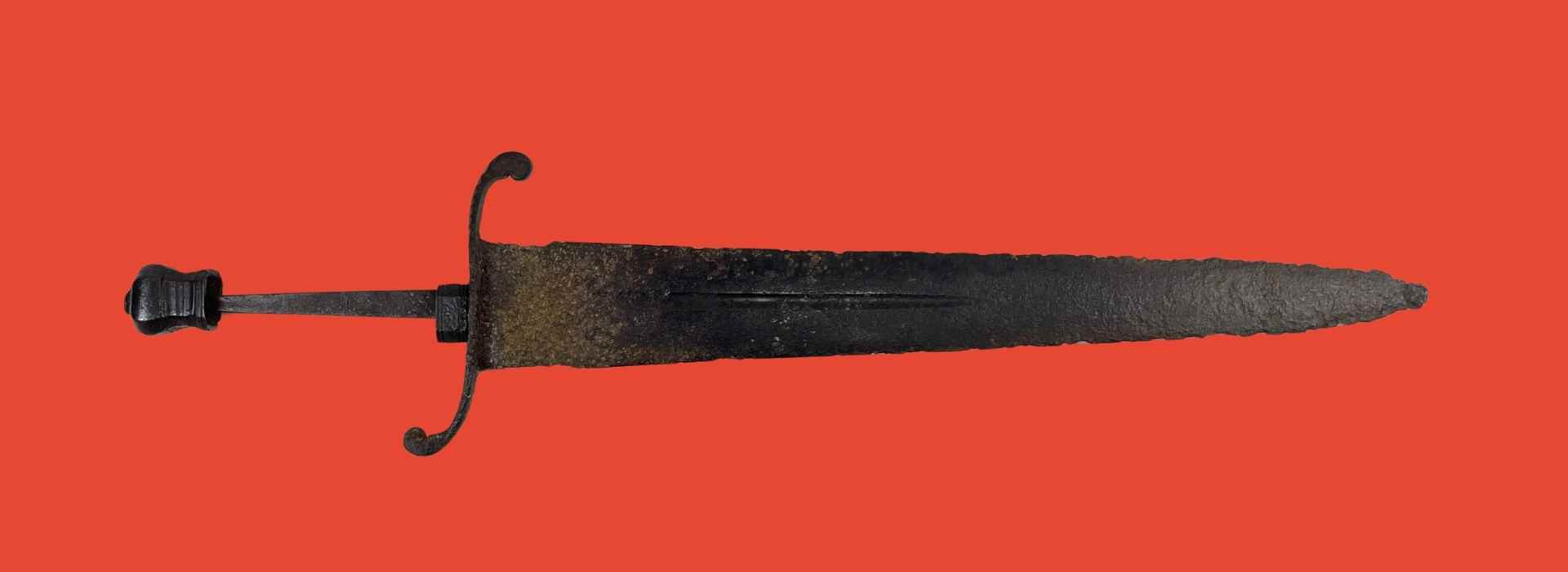
The Keay Dagger was discovered in 1923 by Sadie (Rogers) Keay while breaking prairie land with a horse-drawn plough on the George Robertson farm near High Prairie. At the time of its discovery, the object was believed to be a sword and became locally known as the “Keay Sword” after the woman who found it. For decades, little was known about the artifact’s origins, and it remained one of the more intriguing objects associated with the region’s early settlement history.
In 2022, further research revealed that the object was likely not a sword at all, but a large dagger or hanger—a type of bladed weapon commonly carried at the belt between the 16th and 18th centuries. Distinguished by its characteristic S-shaped guard, the dagger belongs to a family of weapons used throughout Europe during the early modern period. How such an object came to be buried in northern Alberta remains unknown, adding to its significance and mystery.
Today, the Keay Dagger is preserved in the museum collection as an artifact that continues to spark questions about travel, trade, migration, and the many untold stories that connect High Prairie and the Lesser Slave Lake region to the wider world.