
Open Tuesday to Saturday, 10:00 am to 5:00 pm
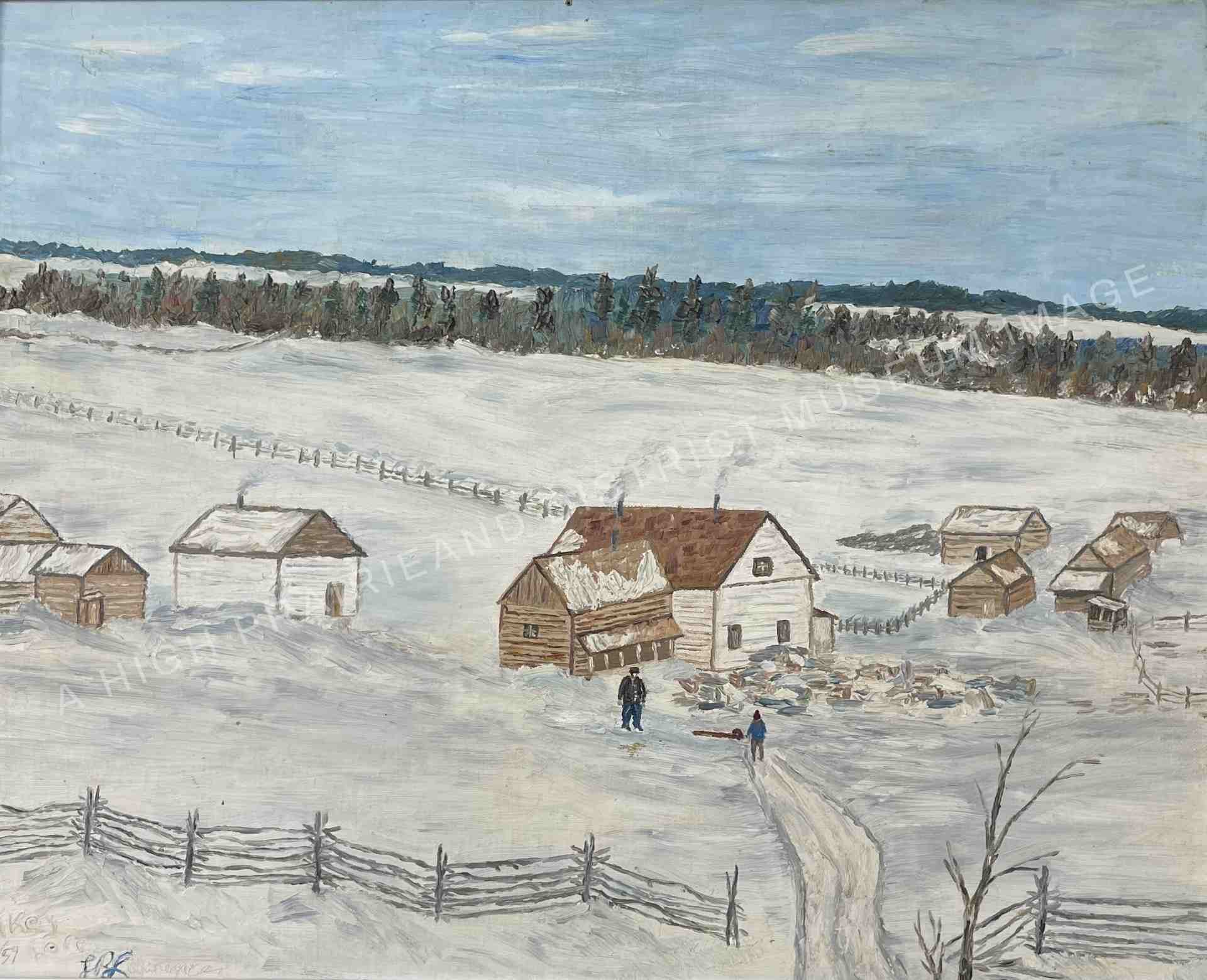
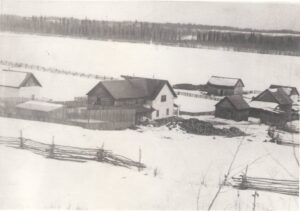
The ranch, established in 1886 by Henry Lawrence along the Peace River near Fort Vermilion, began as a significant agricultural operation in northern Alberta. By the time Sheridan Lawrence purchased his father’s share in 1901, it was already well developed, but under Sheridan and his wife Juey it expanded into a large and highly diversified enterprise. At its peak, the ranch encompassed roughly 1,000 acres under cultivation, supported around 500 head of cattle, and included as many as 35 buildings. Rather than functioning solely as a livestock operation, it became a self-sufficient “raw-to-retail” hub—producing grains such as wheat, oats, and barley, processing them through on-site sawmills and flour mills, and selling goods directly through a trading store. It also served as a regional service center, with Sheridan operating mobile equipment to process grain and lumber for neighboring settlers in exchange for cash, labor, or furs.
From the early 1900s through the 1920s, the ranch evolved into a major economic and trading center in the Peace River district. It produced thousands of bushels of grain annually and engaged in extensive commerce, including large-scale flour production, cattle drives, and long-distance shipments—such as sending thousands of bushels of wheat and flour as far as Fort William (now Thunder Bay). The ranch also became deeply involved in the fur trade, handling large volumes of pelts and generating substantial income from Indigenous trade networks. Sheridan Lawrence’s business strategies—including stockpiling grain, investing in improved milling technology, and leveraging new transportation routes like the D.A. Thomas paddlewheeler—allowed the ranch to compete with major companies like the Hudson’s Bay Company. By the 1920s, it stood as a prominent example of frontier entrepreneurship, integrating agriculture, manufacturing, and trade into a single, highly productive operation.